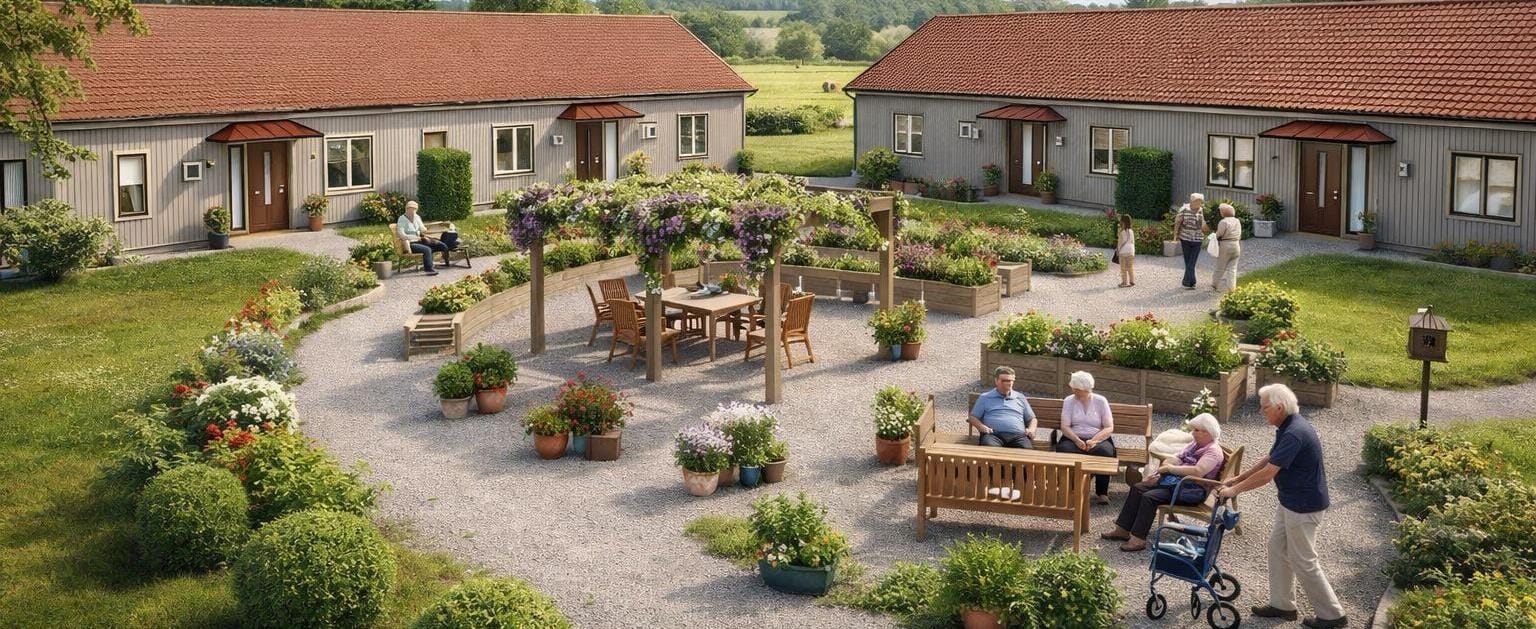
More and more seniors are staying at home longer – not least in Gotland's rural areas. But many of them would like to move to smaller homes in their hometowns. The challenge is that there is a lack of attractive and functional homes for seniors to move into. This in turn causes a lock-in effect in the housing market that makes it difficult for younger people and families with children to find housing in the parishes around the island.
Hela Sverige Leva Gotland now wants to remedy this situation with the project "A parish for a lifetime" with support from Leader Gute.
Five parishes – four steps
Participating parishes in the project are Bäl, Näs, Etelhem, Stenkyrka and Burgsvik.
The project includes four steps to be implemented in the five parishes:
- Needs analysis – through surveys, map the needs and attitudes of older people towards living in rural areas.
- Organizational form analysis – identify appropriate structures for local ownership and management.
- Financing analysis – investigate models for local, cooperative or external financing.
- Model development – develop a concrete model for housing for the elderly, which can be used and adapted by other parishes.
Method for more senior housing
– The participating parishes are in different phases but have all started their own initiatives around the housing issue. The overall goal of the project is to develop practically feasible models for how rural parishes can create housing for the elderly through local collaboration, sustainable financing and adapted organizational forms. The initiative will contribute to creating a ”Parish for life”, where the elderly can stay, the younger ones can move in and the local communities are strengthened socially, economically and practically, says Gisela Wood, project leader from Hela Sverige ska Leva Gotland. In addition to Gisela, also included Arne Strandänger and Ola Eriksson in the working group.
The models developed in the participating parishes will become a clear method that other parishes can use and adapt to their local conditions.
– The overall goal of the project is to develop practically feasible models for how rural parishes can create housing for the elderly through local collaboration, sustainable financing and adapted organizational forms, says project manager Gisela Wood.
Regular meetings and reference group
Regular meetings will be held with the participating parishes and a reference group. The reference group includes representatives from Hela Sverige ska Leva Riks, Region Gotland, Gotlandsbyggen, PRO Gotland, Coompanion Gotland, Fårö Utvecklingsbolag and SLU.
– Through the reference group, we gain knowledge and inspiration from both Gotland and the whole country. Including Region Gotland is very important in developing a dialogue about how the region can facilitate more senior housing in the island's rural areas, says Gisela Wood.
Exciting start in Etelhem
When the project had its kick-off meeting in Etelhem community centre on 29 January, representatives from all five participating parishes and from all stakeholders in the reference group attended. A total of 22 people were present and it was an interesting and appreciated meeting.
After a review of the project, Peter Patomella from Slite how they have worked there with cooperative apartments for the elderly. Slite will be a sounding board throughout the project and share their experiences.
This was followed by current situation descriptions and reflections from the five parishes in the project, which therefore have different conditions and current situations regarding housing for the elderly. Something that Gisela Wood believes is a strength of the project in that it provides a diverse perspective on the issue.
– For example, in Bäl, they have a financing solution for the construction of housing for the elderly through a collaboration with Heidelberg Materials, says Gisela Wood.
Dialogue with Region Gotland
However, there were problems with the construction project in Bäl when Region Gotland rejected the application for a building permit, citing the fact that it was a little too far to the nearest bus stop.
– One might think that the region could then consider moving the bus stop a little instead. This example shows how important it is that in our project we have a dialogue with the region about how they can facilitate the construction of housing for the elderly in rural areas in the future, says Gisela Wood.
The next element was to Malena Bendelin, Head of Unit Community Planning, described Region Gotland's current situation and ambitions regarding housing for the elderly in rural areas.
– That the region sees the issue as important is evident, among other things, from the fact that it has given the go-ahead for a land lease, which means that it has the opportunity to rent the land from the region. It is also possible to mortgage a land lease, says Gisela Wood.
Concrete example of a survey
The next feature during the kick-off meeting was a very useful feature with Peter Eklund, board member of All of Sweden should live as a nation and an expert in construction and housing.
He showed how a survey was prepared on the housing issue for the elderly in Vrena in Sörmland.
Here were examples of clever questions in a simple and clear form. Plus, among other things, maps where respondents could mark where they would most like to live and where there is planned land that can be built on.
The survey from Vrena also contained questions about what older people want in and around their homes – room types/room layout, shared gardens, parking solutions, etc.
“Very good guidance for how we should design the surveys in the five parishes in our project,” says Gisela Wood.
Inspiration from all over the country
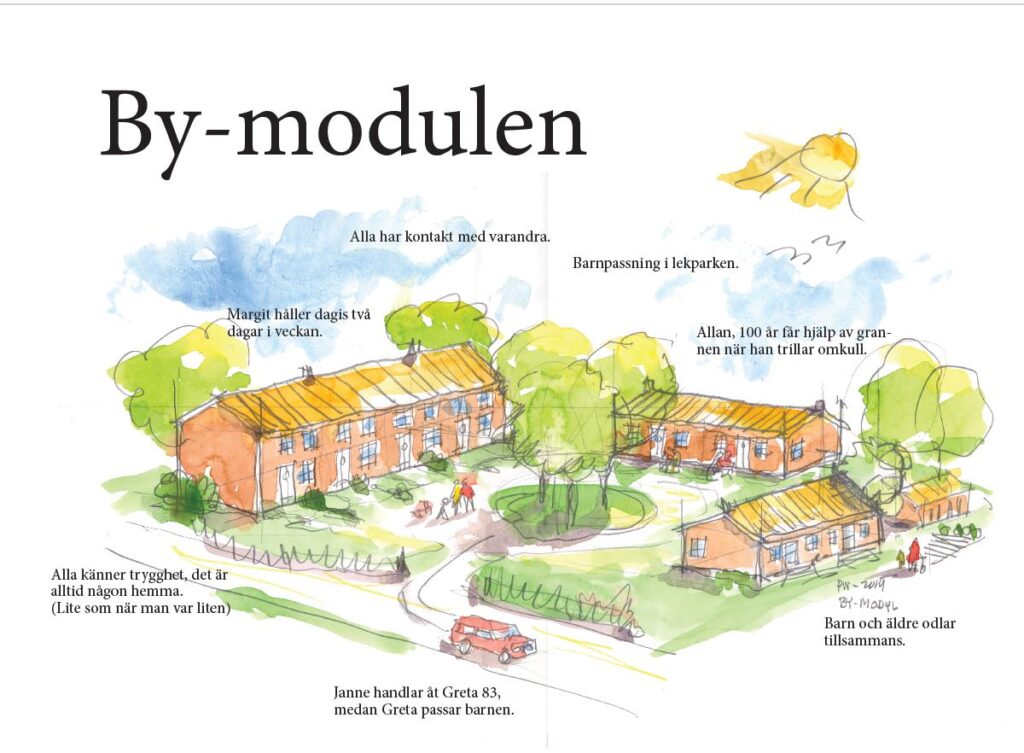
Peter Eklund also showed several interesting examples of completed and planned housing for the elderly from a wide range of rural areas around the country - in the form of both rental and tenant-owned apartments as well as building communities and cooperatives. Among them is the "Village model from Vrena" which was developed based on a survey conducted among the elderly in the area. (See the picture below!)
Also on site was Myresjöhus, which showed its new semi-detached houses adapted for the elderly. Here, the solution is modular houses that keep construction costs down, while at the same time being able to be adapted in various ways based on individual needs and wishes. (See the picture at the top of this feature!)
How the project continues
The project "A parish for a lifetime" is now moving forward with the concrete work in the participating parishes and a number of different meetings, where the reference group, including Region Gotland, participates in the larger meetings.
– After the surveys in the participating parishes have been completed, we will move on to identifying buildable land. Here, for example, the Church of Sweden and the region are important landowners to discuss with. We will also look at different forms of housing and ownership as well as financing in each parish. And concrete proposals for the design of new senior housing, says Gisela Wood.
Parishes other than those included in the project are also welcome to attend the larger meetings to listen and be inspired. Representatives from Rone were already present at the start meetings in January to keep up to date.
– All parishes will be able to take part in our work on an ongoing basis and in the final method that the project will result in when it is completed in the fall of 2027, says Gisela Wood.
There is a special tab for "A parish for a lifetime" on Hela Sverige Leva Gotlands homepage, where everyone can follow the project in ongoing features.