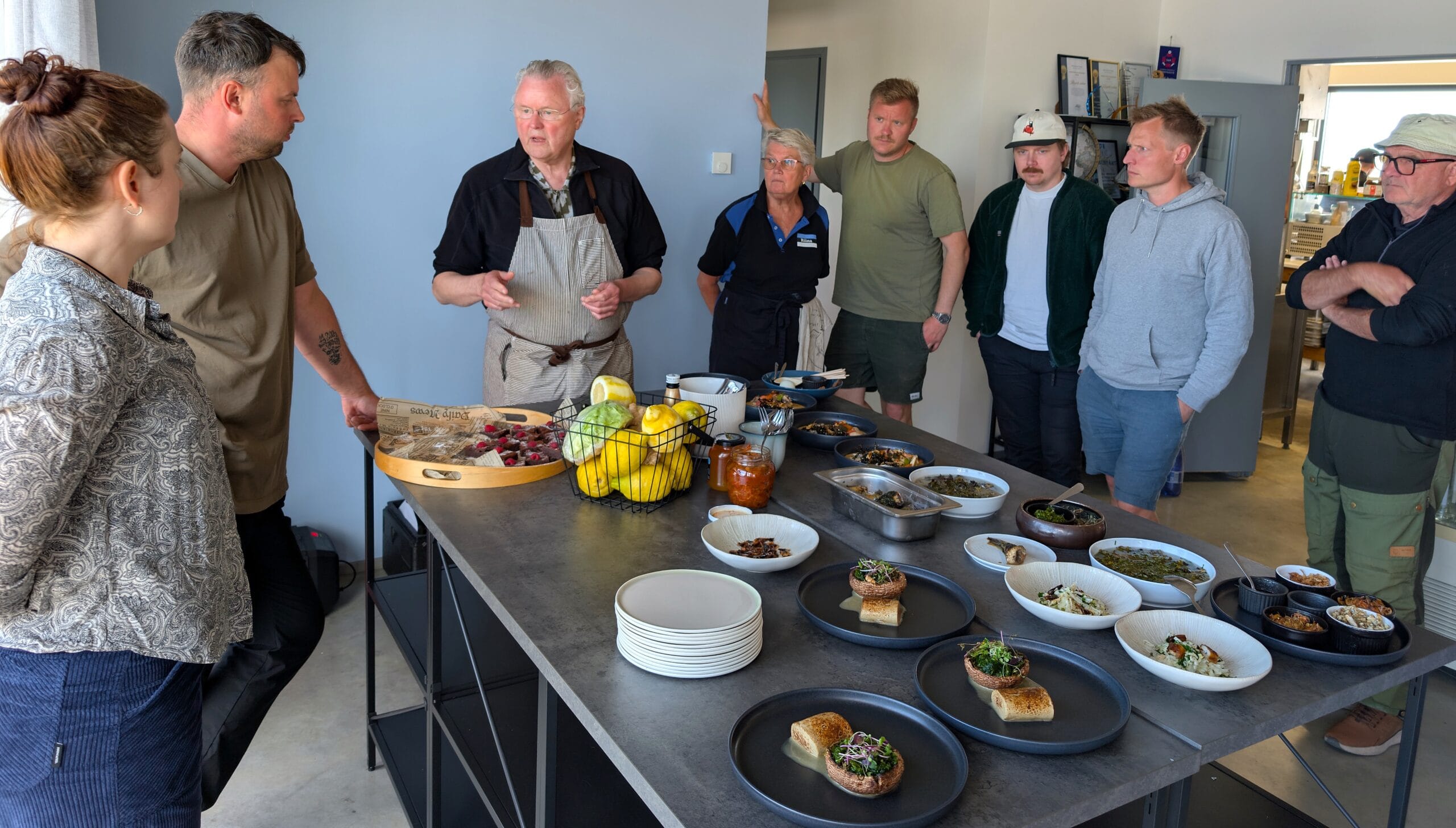
During the activity in Ösel, representatives from all the countries and coastal communities involved in the project participated: Sweden (Gotland), Estonia (Ösel), Lithuania (Klaipeda), and Denmark (Fyn).
– Here, chefs, fishing professionals, and researchers, including those in gastrophysics, participated. It became very exciting and creative days, where we shared knowledge, exchanged experiences, and explored innovative maritime recipes that support regenerative food tourism, says, Ellen Lundqvist, the operations manager at Leader Gute and project manager for Regenerative Blue Food Tourism.
Workshops and study visits
Together, the participants primarily explored the culinary potential of fish, mussels, and seaweed under the guidance of the gastrophysicist Ole G. Mouritsen and the maritime raw materials master Poul Rasmussen. Within the project, these two will develop a recipe collection regarding regenerative marine Baltic Sea food. The species included in these workshops were, among others, silver bream, stickleback, butterfish, small blue mussels, bladderwrack, and sea lettuce.
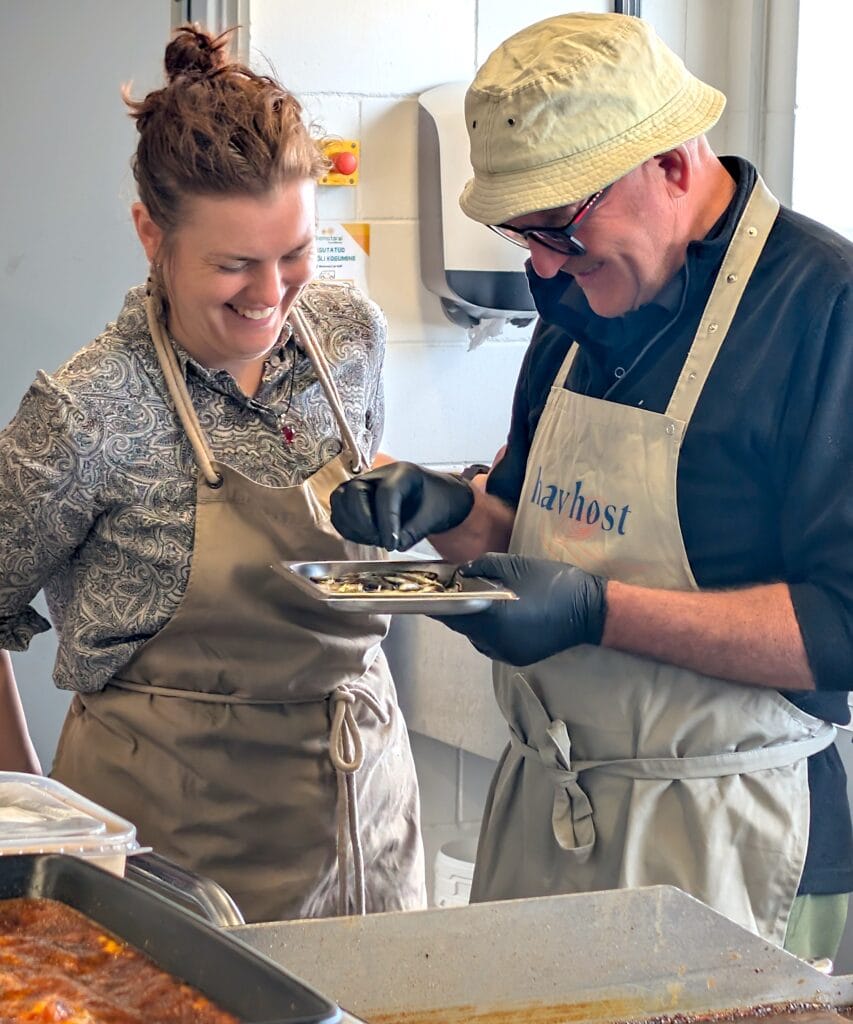
Ellen Lundkvist and the Danish raw materials master Poul Rasmussen discuss various maritime raw materials and how they can be used in new innovative dishes.
Study visits were made, among others, at the marine research station Köigeste Filed Station, as well as Redstorm, a facility where ethical and sustainable farming of rainbow trout in the Baltic Sea is practiced, where the cultivation of seaweed and mussels serves as an environmental compensatory measure.
– The project is now moving forward with a partner meeting in Gotland in September, again with participants from all the involved countries. Hopefully, there will also be a whole group coming over from the Estonian island of Runö by boat; we will see if the winds are with us! says Ellen.
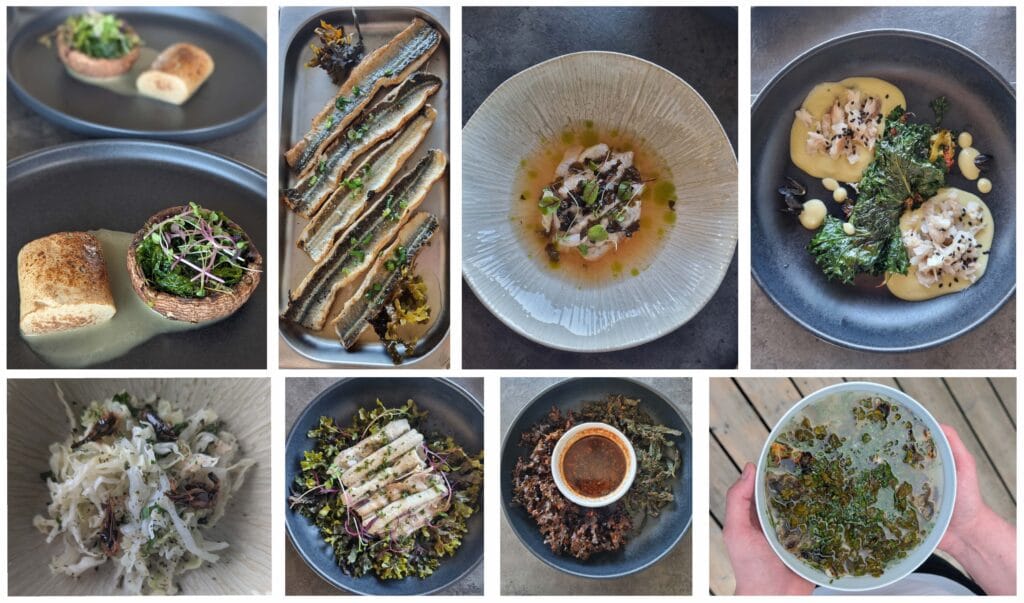
A long series of new innovative dishes with ingredients from the Baltic Sea – both fish, shellfish, and algae – were developed and tested during the activities in Ösel.
Local work in Gotland
At the same time, the local work in Gotland within the project continues
– Each partner country in the project should establish local so-called ”CoP:s” (Community of Practices) consisting of local representatives from civil society, the private sector, and the public sector. Together, we explore how to create, package, and market regenerative blue food experiences primarily during the low season, explains Ellen.
This local work has already made good progress in Gotland, and three CoP meetings have been held. The international exchanges, most recently in Ösel, are an important source of inspiration and knowledge in the local work. During the last local CoP meeting at Broman & Son, it became clear that there is interest among both fishermen and restaurateurs in Gotland to collaboratively develop a new model for local food from the sea. A model that can make the island's use of maritime raw materials both more sustainable and attractive to visitors.
Read more about the Regenerative Blue Tourism project here:
Project on regenerative blue food tourism with support from the Swedish Institute